Starbright Foundation · 1997 – 1999
Starbright World — a social network before social networks
An early online community that gave seriously ill children moderated chat, profiles, educational multimedia, and live video so long hospital stays felt less isolating.
Role: Software Engineer
- Technology for human connection
- Early online communities
- Empathetic product design
Origin
The story
Before Facebook. Before Zoom. Before Slack. Before social networking even had a name.
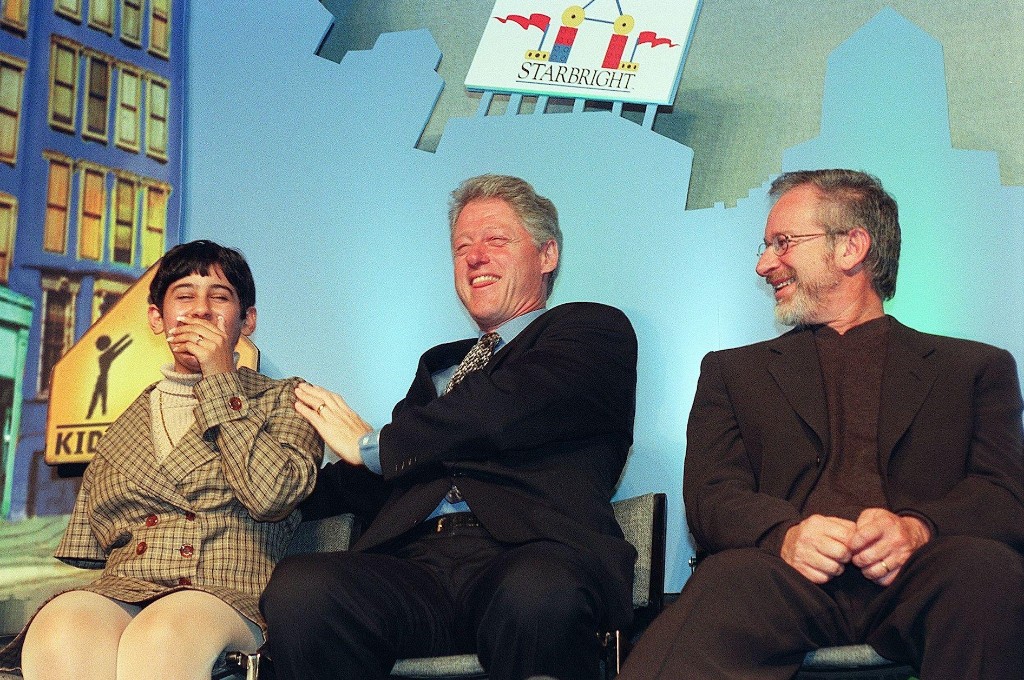
When I joined Digital Evolution in 1997, one project immediately stood apart from everything else we were building. It was called Starbright World—an ambitious collaboration funded and supported by hospitals, technology companies, and individuals including Steven Spielberg and General Norman Schwarzkopf.
Its mission was beautifully simple: help children living with serious illnesses realize they were not facing them alone.
Children undergoing long hospital stays could connect with others experiencing the same treatments, learn about their conditions and the procedures they faced day to day, chat together, participate in live video calls, and simply have friends who understood what they were going through.
Today this sounds obvious. In 1997, it felt almost like science fiction.
Collaboration
People I built this with
The people behind this chapter—and the part each of them played in shaping the work.
Fractional CTO at SourceSeek · Technical Lead, Starbright World
Dave led the technical direction for a product that crossed classic web development, desktop multimedia, custom real-time networking, and early Intel video hardware. His role was essential in turning an unusually ambitious healthcare-community concept into software children could depend on.
Healthcare technology founder · Project Manager, Starbright World
Howard gave me two memories that have lasted for decades. He took Vu and me to UCLA to see children using Starbright World, permanently changing how I thought about software’s human impact. Later, while celebrities were recording audio for the application, he asked Melissa Joan Hart to leave me a surprise message: “Berk is the greatest!”
Software Engineer, Starbright World at Digital Evolution
Vu and I built the Starbright World experience side by side. I still remember him running to the third floor of our Brentwood office while I initiated a ProShare call from my desk—the first time live desktop video felt real. Howard later took both of us to UCLA to see children in the oncology department using what we had built.
Founder, Civic Design Studio · Product Designer, Starbright World
Tommy shaped the overall product and interaction design for Starbright World. Vu and I worked carefully to preserve his intent in the implementation—the gentle movement, approachable navigation, and sense of belonging were fundamental product requirements, not visual decoration.
UI Designer, Starbright World at Digital Evolution
James translated the product direction into the interface screens children used. His designs gave the experience its warm, non-clinical visual language, and Vu and I painstakingly reproduced those details in the application.
Journey
Building connection at the edge of the early web
A social network before social networks existed
Starbright World began in 1995 as a pioneering 3D virtual world linking children at four hospitals over a private broadband network. Intel supplied ProShare-enabled PCs for patient-to-patient video and voice, Sprint provided the network, and Worlds Inc. created the original virtual environment.
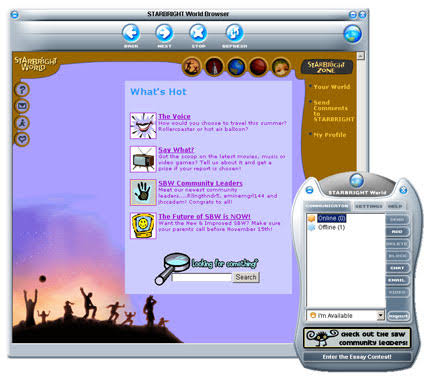
By 1998, Starbright World had evolved into a private social network with message boards, chat rooms, videoconferencing, games, profiles, and educational content. Our work at Digital Evolution belonged to that next chapter—still years before Facebook and before social networking had a common product language.
There were no mature messaging platforms, video-conferencing services, cloud APIs, or established frameworks for building online communities. Almost everything had to be assembled or invented from scratch.
Working with Dave Hecker, Howard Spector, Vu Pham, Tommy Wong, and James Tolentino, we combined communication, identity, education, play, and moderation into a single experience designed specifically for children facing serious illnesses.
- Real-time chat
- User profiles
- Moderated communities
- Educational content
- Multimedia experiences
- Live video conferencing
Designing for empathy
Unlike many commercial projects, success was not measured by sales or engagement metrics. Every design decision asked a different question: would this make a child feel a little less alone?
The interface intentionally avoided anything intimidating or clinical. Soft colors, friendly illustrations, gentle transitions, rounded shapes, and warm interactions created an environment that felt calm and welcoming.
Tommy Wong designed the overall product experience, and James Tolentino designed the interface screens. Vu and I painstakingly implemented what they envisioned, paying close attention to animation, screen transitions, and interaction quality.
The emotional character of the product was not decoration. It was fundamental to making the experience kid-friendly and giving children a sense of belonging.
- Soft colors instead of clinical visual language
- Friendly illustrations and rounded forms
- Gentle transitions and calm motion
- Warm, approachable interactions
- Faithful implementation of the product and UI design
“Would this make a child feel a little less alone?”
Building video conferencing before Zoom
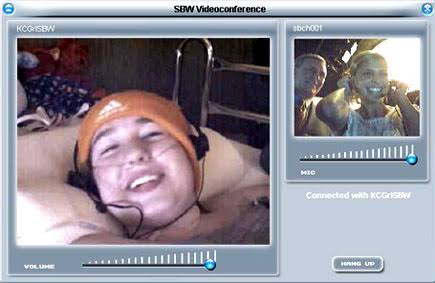
One of the most exciting parts of the project was live video. At the time, almost nobody had this capability.
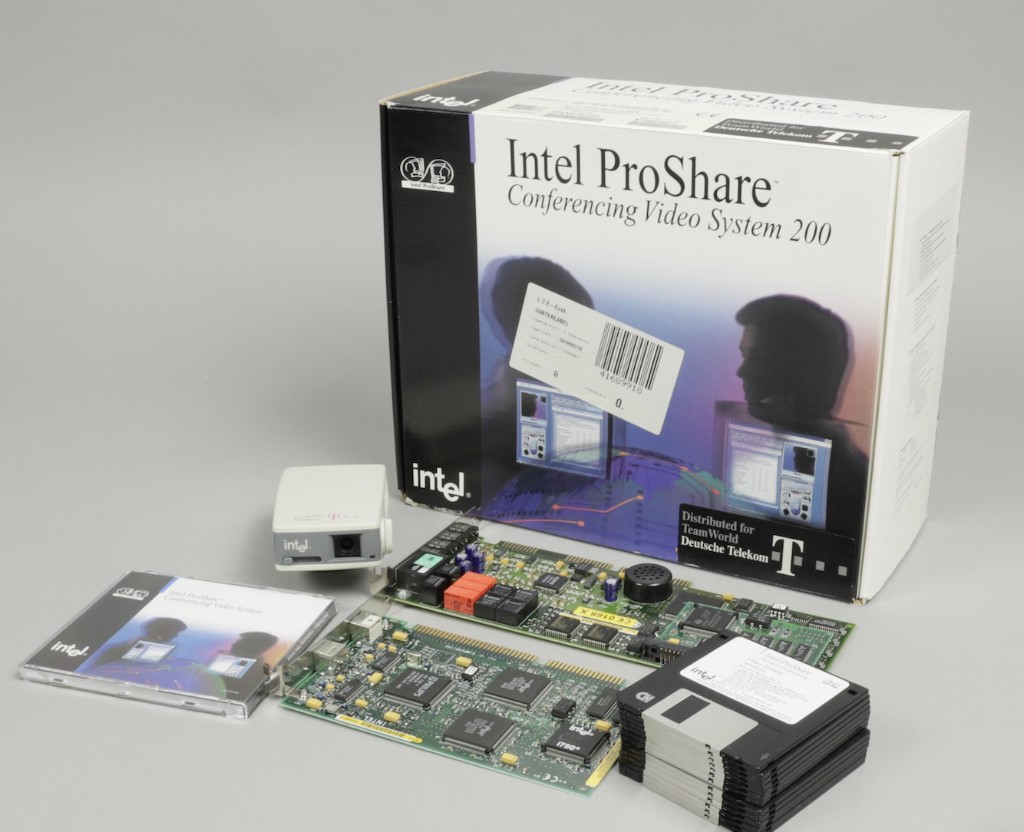
Only a few companies possessed practical desktop videoconferencing technology. We made a special arrangement with Intel to get access to its ProShare Conferencing Video System 200, and Intel provided cameras that we installed throughout the office.
I still remember Vu running to the third floor of our Brentwood office while I called him upstairs from my desk. Today that sounds completely ordinary. Back then, seeing live video appear across the building felt like magic.
We spent countless late nights debugging ProShare, building the chat protocol, designing screen transitions, and making the experience reliable enough for children who depended on it.
A full-stack product before full-stack had a name
The implementation reflected a transitional period in the web. No single technology could deliver the entire experience, so we combined server-rendered pages, desktop multimedia, custom real-time networking, and specialized video hardware.
Looking back, it is striking how much product capability we assembled before modern JavaScript frameworks, WebSockets, cloud infrastructure, or browser-native real-time communications existed.
- Microsoft ASP—classic ASP, before ASP.NET
- Visual Basic
- Macromedia Director
- Custom networking protocols
- Intel ProShare
- Windows NT
The softly rotating bubbles
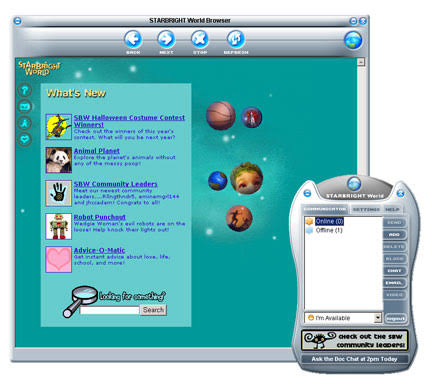
One interaction still makes me smile. I suggested a navigation experience where softly rotating 3D bubbles floated across the screen, each representing a different part of the application. When a child selected one, the content would gracefully slide in from the side—an idea Jason later helped evolve into the final interaction.
It was not animation for its own sake. The slow movement gave the interface a sense of calm, curiosity, and playfulness. That emotional quality mattered as much as the mechanics of navigation.
The day everything became real
One afternoon Howard took Vu and me to UCLA Medical Center to watch children in the oncology department use the system we had spent months building.
Until then, it had still felt like a software project. Watching hospitalized children connect with one another through something we had created completely changed how I thought about technology.
That visit left an impression that never faded. It showed me that software is not just code. Sometimes it is companionship. Sometimes it is reassurance. Sometimes it simply helps someone feel less alone.
“Sometimes software is companionship.”
A memory I still have
As we were finishing the project, several celebrities recorded voiceovers for audio portions of the experience. One of them was Melissa Joan Hart, then starring as Sabrina the Teenage Witch.
Howard asked her to record one extra message for me as one of the project’s lead engineers: “Berk is the greatest!” It is a tiny keepsake from nearly thirty years ago. I still have the recording, and it still makes me smile.
Audio keepsake
Melissa Joan Hart’s message for Berk
Transcript: “Berk is the greatest!”
A return to healthcare
When I joined Digital Evolution, I expected to build websites. Instead, I found myself helping build one of the earliest online communities for children with serious illnesses.
Nearly three decades later, when I began building healthcare products again—including Triangle Health—that afternoon at UCLA immediately came back to me. Healthcare was not an abrupt pivot. In an important way, it was a return.
After transportation platforms, mapping systems, developer infrastructure, AI agents, and healthcare products, I can still trace one continuous thread back to Starbright World: use technology to reduce isolation, create connection, and improve people’s lives. The tools have changed dramatically. The purpose has not.
Context
The problem and my role
Problem
Children living through serious illnesses and debilitating conditions could feel isolated from friends, school, and other people who understood what they were experiencing. Starbright World set out to create a safe, welcoming online place where they could meet peers, learn about their conditions and day-to-day procedures, play, and realize they were not facing treatment alone—years before the web had mature community or video-conferencing platforms.
Role
Worked as a full-stack software engineer before the role had a name, partnering closely with technical lead Dave Hecker, project manager Howard Spector, engineer Vu Pham, product designer Tommy Wong, and UI designer James Tolentino. I implemented the interactive experience, real-time chat and networking behavior, multimedia integration, animation, and Intel ProShare video conferencing while helping translate an unusually empathetic design into reliable software.
Constraints
- Build a real-time online community before social networking products, cloud APIs, or modern web frameworks existed
- Create an experience safe and approachable for children facing life-threatening illnesses
- Combine classic web pages, desktop multimedia, chat, and hardware-assisted video into one coherent product
- Make moderation and trust foundational to communication between children across hospitals
- Deliver live video through early Intel ProShare hardware and networking technology
- Preserve a soft, playful, non-clinical interface despite the technical limitations of 1990s web and multimedia tools
System
Architecture
System map
A safe community across hospital walls
Starbright World connected children through a welcoming multimedia experience while moderation, custom networking, and early video hardware worked behind the scenes.
- 01
Children in hospitals
Young people living through serious illness and long periods of isolation
- 02
Welcoming interface
Soft motion, friendly illustration, profiles, and approachable navigation
- 03
Community experience
Educational content, multimedia, games, and shared spaces
- 04
Moderated real-time chat
Custom networking supported safe conversation and friendship
- 05
Intel ProShare video
Early cameras and conferencing hardware enabled face-to-face connection
- 06
Connection beyond treatment
Children could meet peers who understood what they were experiencing
Execution
What I built
- Built a unified online-community experience spanning real-time chat, profiles, moderated spaces, educational material, multimedia, and live video.
- Partnered closely with engineering, project management, product design, and UI design to translate an empathy-first concept into a dependable product.
- Implemented custom real-time networking and refined the chat protocol before browser-native real-time communication libraries existed.
- Integrated Intel ProShare cameras and conferencing technology through direct collaboration and early hardware access from Intel.
- Combined classic ASP, Visual Basic, Macromedia Director, and Windows NT to bridge the early web with rich desktop multimedia.
- Implemented gentle motion, transitions, and playful navigation as functional parts of a calming, non-clinical user experience.
- Validated the work by observing children in the UCLA oncology department use the system to connect with one another.
Tradeoffs
Technical decisions
Compose the product across multiple runtimes
- Decision
- Combine classic ASP and Visual Basic with Macromedia Director, custom networking, and Intel ProShare rather than constrain the experience to the browser technology of 1997.
- Why
- The product needed rich multimedia, real-time communication, and live video capabilities that no single platform could provide.
- Tradeoff
- Bridging web, desktop multimedia, protocols, and hardware created substantial integration and reliability work, but made the complete experience possible.
Treat moderation as product infrastructure
- Decision
- Build moderated community spaces into the core communication experience.
- Why
- A community for medically vulnerable children needed safety and trust before conversation could create genuine connection.
- Tradeoff
- Moderation adds operational and product constraints, but an unmoderated system would not have served the people it was designed for.
Design calm into the interaction model
- Decision
- Use soft visuals, gentle transitions, warm feedback, and slow playful movement instead of the dense or technical interfaces common at the time.
- Why
- Children entering the experience needed to feel welcomed rather than reminded of a clinical environment.
- Tradeoff
- Achieving the intended emotional quality required unusually careful implementation within the performance limits of early multimedia software.
Use emerging video hardware for human presence
- Decision
- Integrate Intel ProShare cameras and conferencing technology directly into the community.
- Why
- Text chat created conversation; live video added presence for children separated by hospitals and treatment.
- Tradeoff
- Early hardware and protocols were difficult to debug and deploy, but the resulting face-to-face connection was unlike anything widely available on the web.
Results
Outcomes
- Helped deliver one of the earliest online communities built specifically for children living with serious illnesses.
- Combined moderated chat, identity, educational content, multimedia, and live video years before integrated social platforms became commonplace.
- Saw the system used by children in UCLA’s oncology department, turning an ambitious technical project into a lasting lesson about technology’s human impact.
- Established an empathy-first product principle that continues through later healthcare work, including Triangle Health.
Reflection
Lessons learned
- “Empathy can be an architectural requirement: safety, motion, visual tone, reliability, and moderation all shape whether people feel welcome.”
- “Watching someone depend on software changes how you build it; technical quality becomes inseparable from the human experience it enables.”
- “Healthcare was not a late-career pivot. Starbright World planted the same purpose nearly thirty years earlier.”
Tools
Stack
“Nearly thirty years before AI healthcare became my focus, I had already experienced how thoughtfully designed software could reduce fear, build connection, and improve someone’s quality of life. That lesson has stayed with me ever since.”
Next case study
Multi-agent AI healthcare platform →